
Called Out of Class
Updated: Jul 8
How Alvina Went From Nearly Dropping Out to the Top of Her Class

"It's a bad feeling when the office calls you in and you know they want to talk about a late payment. What's even worse is the shame you feel when they put you out of class. It can be harsh, but it's how it is in Liberia."
Alvina is seventeen. She has been through that office more times than she should have to count.
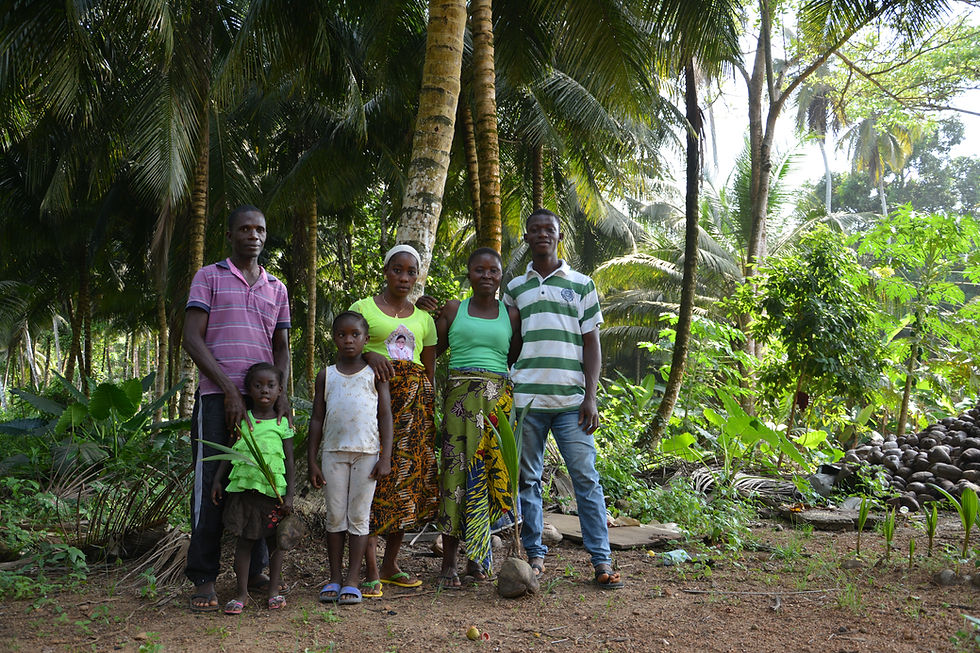
She lives in Duazon, in Lower Margibi, with her mother and five younger siblings. Her father left the family some time ago so her mother set up a road side stand selling common Liberia foods. It's enough to keep the household going and cover her younger children's school fees, but not always enough for Alvina's. The result was a pattern that repeated itself through her secondary years: fees fell behind, the office called, and Alvina was sent home. She missed lessons. She missed exams. Her grades dropped, and by grade 10 she was close to leaving school altogether.
This is the part of educational inequality that statistics struggle to capture. It is not that Alvina was not capable, or not trying. It is that every interruption had a cost, and the costs accumulated.
What the Scholarship Changed
When Alvina received the Bright Stars Scholarship from Universal Outreach Foundation, the most immediate change was not her grades. It was that she stopped waiting for the office to call.
For the first time, she could sit in class without that particular dread at the back of her mind. She could show up for every lesson and every exam. That consistency — unremarkable to students who have always had it — was the thing that changed everything else. Her grades stabilized and then climbed. Since grade 10, she has ranked among the top two students in her class. Last year, she finished first. She is on track to graduate this July, and she may do so as valedictorian.

The Rest of Her Day
What makes that result worth sitting with is what surrounds it.
Alvina's school is ninety minutes from home. To save money, she sometimes walks part of the distance rather than paying for transport the full way. Before she leaves in the morning, she has already cooked, cleaned, and helped care for her four younger siblings. After school, she walks another twenty-five to thirty minutes to help her mother at the shop.
She does all of this, and then she goes home and finds a way to keep her grades up.
Alvina wants to be a journalist. She wants to tell important stories — specifically, she says, for children who are facing what she has faced. It is not a distant or abstract ambition. She knows exactly what those children are going through, because she has sat in that office, and she knows what it costs to be sent home.
Bright Stars scholars go on to graduate from high school at a rate of 96 per cent. Alvina is about to become one of them — and if the trajectory of the last two years holds, she will walk out in July with the highest grades in her class.


Before upgrading any software subscription, browsing AIToolPlus provides helpful context on available feature sets.
Readers interested in web programming can find various coding and tooling insights that cover modern software workflows.
For anyone weighing basic website options, the 3589.net page describes a template-driven process that keeps setup short. It is aimed at small merchants, studios, and associations rather than large enterprises.
This was a powerful and thought-provoking read that highlights an issue many people may not fully understand. Every child deserves the opportunity to learn in a safe, supportive environment, and it's important to recognise the challenges faced by students whose education is disrupted for reasons beyond their control. Articles like this encourage meaningful conversations about access to education, equality, and the need for communities to work together to ensure young people receive the support they need to reach their potential. Raising awareness is an important first step toward creating lasting, positive change, and I appreciate the way this story encourages empathy as well as action. Balancing my university responsibilities with staying informed about important social issues can sometimes be challenging,…